IFS works at the level of the emotions, constellation at the level of the conscience. When what counts as good and bad for you widens out, you can choose many more paths — and we tune your nervous system to that, so that you can actually get going down those paths.
More room opens up for what responsibility you take on, and where you take your life.
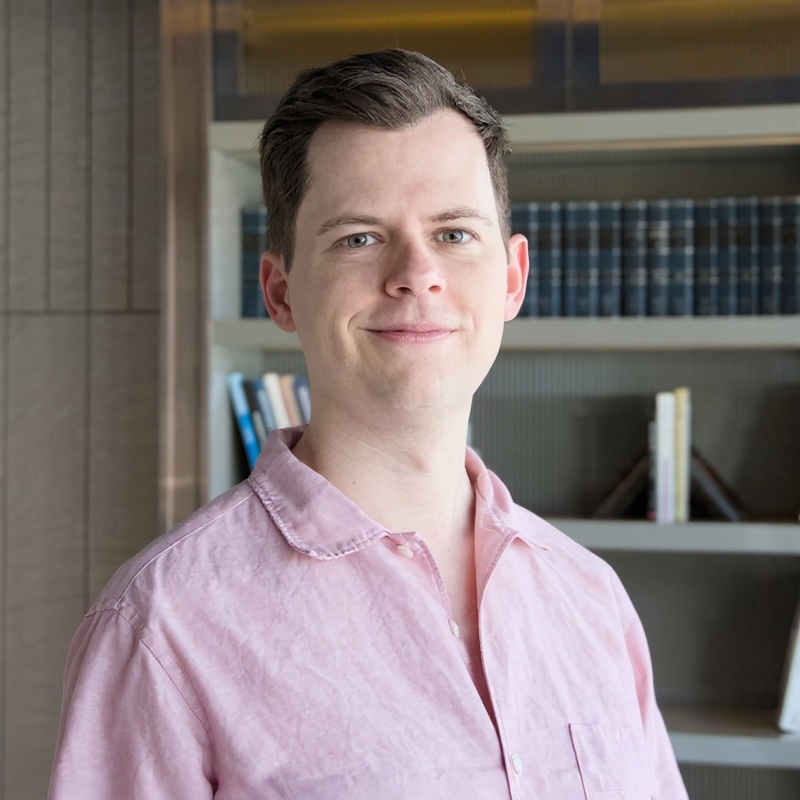
I have 6 years of corporate experience behind me, and a Stanford GSB MBA. I became a coach and a healer, and what I want is to use the tools in my work that helped me build a balanced life as an overachiever and as an gifted.
I learned executive coaching there, during the MBA, I finished in 2021; IFS from the late Derek Scott, who was the founder of IFSCA; and constellation from Leslie Nipps at Convivium Constellations — the lineage this work carries on is Daan van Kampenhout's (Systemic Constellations / Shamanic Rituals). The three of them are in one pair of hands because the handover is the point: if one person does the constellation and another does the coaching, and they don't use the same model, then the thing that would have happened between the two is exactly what gets lost.
Over the past three and a half years I've worked with more than forty people with these methods — leaders, overachievers, gifted people and people looking for healing. The best of what I learned in that time, and of what worked for me myself, is what I bring into this program.
I don't do this work because I couldn't do other work, I do it because I chose this, this is what I wanted to do, and this is what's exciting to me. I was a manager, and I'm not a bad manager either, I was a leader, I am a leader, and there's another business of mine running alongside.
Gifted people with a lot of responsibility
You go looking for big responsibility, or your relationship with it is complicated. You've achieved a lot, and at the same time you know it didn't come by itself — there's something in you that drives you. In my head I call you gifted: for the energy that comes through you when you talk about what actually interests you.
You got this far on hard work and discipline. You'll get to the next station like that too, only you wear out on the way, and you're not sure you want to keep doing this for another ten years.
You've been in therapy already — and it worked.
You don't want to quit achieving, and I'm not asking you to. The parts of you that have worked this hard until now don't lose what they know just because we look once at what they're afraid of — all that happens is that they don't have to keep you on constant alert any more. What most people feel meanwhile is a ceiling: on paper everything is there for the next step, and the step still doesn't start.
You are the owner of your own process the whole way through
I don't want to help you. What we work on together is you reaching the weight and the position in your life where you're actually satisfied — and for that you have to be the owner of your own process the whole way through.
That's why this isn't a good place for someone therapy didn't work for, and it isn't one for someone who wants me to fix them. Anyone who is in crisis right now needs a therapist, not a coach.
You can move bigger and bigger things in your life.
First you move your current experiences, situations and relationships. Then external things and new goals that you want to reach with the supporting force of the inner work. The things that until now were stuck situations, difficulties, unresolved themes, and that don't support the goal you have now — with those you're going to experience a serious shift.
Over nine months your nervous system and your general functioning will switch over into a mode in which you're practically inside a self-development loop: the program doesn't come to an end, it hands itself over to you. You learn a whole pile of tools you can work with on yourself too. You learn the solo version of IFS, for instance, so at some level you can do IFS on your own — and from that you benefit not only from the work you do with me, but outside it too.
You'll live through constellations alone and together with others as well. These widen your understanding of where the whole thing comes from so differently that integrating one such process can take months — that's why the integration months are there, and that's why they can't be skipped.
What you know about yourself you have already worked with
The rest, though, isn't a question of knowing. We work at it from two directions, and there's a third, where all of it starts to show on your everyday life.
Someone who has built a company may not be able to believe that they can put it down as well. And it's no use having every skill for it on paper — your nervous system simply isn't wired yet for you to be ready for this.
I put the integration months in so that it doesn't run non-stop: as your subconscious changes, your life changes with it, and that has to be given time.
The three methods that are in the nine months
Somatic IFS
In a guided meditation we look for the parts of you that activate in certain situations, and we look at what they are protecting. There are two ways to get there, through the subconscious and through the body, and with me it usually takes both.
More →From the outsideConstellation
With the help of representatives we set out your — or your company's — current situation, we look for a possible resolution, and we say out loud a number of hard things whose saying and expressing has healing power.
More →In the worldCoaching
Every session we start from where you are right now, and we build something — a system or an artifact — that you keep at the end. Business, finance, agentic productivity.
More →Thirty-seven sessions across nine months
A month to prepare, three two-month work blocks, two integration months between them — and after the nine a tenth, in which we close together.
- SEPstart
- OCT
- NOV
- DECintegr.
- JAN
- FEB
- MARintegr.
- APR
- MAY
- JUNclosing
- Start
- Work month
- Integration
In the six work months, 2–3 hours a week; in the integration months only the monthly lecture runs.
At a glance
This is what the package contains
The nine-month container
- 12 one-to-one healing sessions · IFS, constellation or a mix of the two, an hour and a half each
- 12 constellations · 3 with your own theme, 9 as a helper in someone else's
- 9 monthly lectures with live practice · an hour and a half, half concept, half shared practice
- 4 coaching sessions · each one leaves behind a system or an artifact that you keep
What else comes with it
For every cohort.
- Alumni access · with an event every quarter
- A free helper seat · at every online group constellation I run
- We call you first · into the cohorts of later programs
How they spread across the nine months
The nine lectures
One theme a month, in a lecture of an hour and a half. Half of it is presenting the concept, half is shared practice or a constellation, which everyone takes part in.
- Self-development as theatre
- Romantic and life-partner relationships
- Our relationship with AI
- Emotions and attention
- Self-expression, purpose, music, dance, creation
- Business and money
- Addictions, ghosts and demons
- Sex, masculine and feminine energiesnot about the established roles, but about the energies working inside us, and not with exclusive definitions; the closing part is a shared constellation
- Death, spirituality, the big questions
When do you want to start?
A new group starts roughly every three months. The founding cohort begins in September 2026, the nine months end in May 2027, and we close together in June. The winter group starts in December, the spring one in March — if the timing isn't right now, that isn't a problem.
In the first integration month you can decide not to continue.
By then you have a full cycle behind you: a two-month work block, and the integration month in which it settles. If you decide then that you're not continuing, you get back two-thirds of what you paid. Beyond that you commit yourself to the rest of the program.
The starting cohorts
4 seats · by invitation
+2 seats
+2 seats
Winter cohort — how to apply
- Applyingby 30 September 2026
Applications close two months before the group starts.
- Intro conversationWithin 2 weeks of applying
Free and with no obligation. Half an hour, without preparation: you tell me where you are and what you'd work on, I answer everything you ask.
- AnswerWithin 30 days of applying
Within that time you find out whether you have a seat in the cohort.
People I've worked with
Through consistent sessions, I became more aware of the different parts of myself that arise in various situations. This awareness has improved not only my personal well-being but also my relationships and professional life.”
I'd always felt confident in my abilities to achieve the things I want to achieve — with the proper energy, determination. What's changed is it seems more fun. There was never a question I'd get where I wanted to go, but now I'm not carrying the 50-pound weight.”
The biggest difference I can feel is in my self-confidence. I'm not sure I was even aware before that this is something I should work on. Since I know I can trust myself, I also trust my team a bit more.”
Common questions
How do I get in?
The founding cohort is by invitation. There's no application form: I fill the four seats with personal invitations. If you're interested, say so up to 5 September 2026, 23:59 — after that the founding cohort closes, and the winter group is the next one.
After that it's half an hour, without preparation. You tell me where you are and what you'd work on, I answer everything you ask, and at the end we decide together whether this is good for you now. I talk to more people than there are seats; if it doesn't come together now, you can easily get into the next cohort.
What if the timing isn't right now?
A new group starts roughly every three months. The founding cohort begins in September 2026, the nine months end in May 2027, and we close together in June. The winter group starts in December, the spring one in March — if the timing isn't right now, that isn't a problem.
Who will the other three people be?
There will be four of you in the cohort. There's no age limit, and I don't name anyone either. I don't know the composition in advance: I talk to more people than there are seats, and I don't decide in order of arrival.
I try to have several kinds of people in the cohort — in that women and men alike. We're talking about four people, so I'm not promising a ratio. What I do know: almost everyone comes out of that gifted circle, and these four people will be there in each other's constellations for nine months.
How much time does it take a week?
In the six work months, 2–3 hours a week on average, in sessions. In the integration months less than that: there only the monthly lecture runs.
What happens if it gets hard?
It will get hard. The structure is there for exactly this: the two-month blocks are followed by an integration month where the sessions don't run, and you have time to put down what we stirred up. If you get stuck meanwhile, you bring that to the next session — with me that doesn't count as a failure, that is the work itself.
If something comes up during the nine months that needs more serious care than this, then the program pauses, and I help you find who is worth turning to. This is not therapy, and it isn't meant to stand in its place.
Where and in what form does it happen?
Entirely online, in English. On your side this is all it takes: a place where you are alone, where you like being, and where you're not disturbed. That's it.
A constellation looks like this: you're in a Zoom room, in the circle of the constellation, and you watch the representatives set out the situation with the facilitator's help.
Who are the representatives in a constellation?
Helper is everyone who comes to someone else's constellation and takes part; representative is the one we pick to stand for somebody — in a group of four, often everyone.
In a constellation the representatives are the members of the group — and besides them invited representatives, so that there are enough of us. They aren't random people: they are practised representatives who have worked in this role elsewhere too, and who are bound by the same confidentiality obligation as we are. What they take part in is an emotional experience for them as well.
Does what is said in the group stay there?
All the work — and the fact of the collaboration itself — happens under an individual and a mutual confidentiality agreement. We share experiences only with your prior permission. What is said in the group is covered by strict confidentiality; if outside representatives join a constellation, exactly the same rules apply to them.
No session is recorded.
What if I miss a session?
The 9th week of every two-month block is a buffer week — that's where we try to put what slipped. The shared constellations, though, are tied to the group's time, and those we can't move.
How late can I cancel a session?
Shared sessions: 48 hours beforehand. One-to-one sessions: 24 hours beforehand. Inside those, the cancelled session counts as used.
When are the sessions?
We finalise the time of the shared sessions together with the cohort, still in September. The one-to-one sessions we arrange with you.
Are you available between two sessions?
For questions about scheduling I'm available with a 48-hour response time. To questions of content I can only answer between sessions in exceptional cases — what you raise in writing, though, we bring to the next session and talk through.
There's no homework.
What are these monthly lectures?
One theme a month, in a lecture of an hour and a half. Half of it is presenting the concept, half is shared practice or a constellation, which everyone takes part in. Nine months, nine themes — it runs in the integration months too, and then it's the only shared session.
What can I use the four coaching sessions for?
In every session, starting from where you are right now, we find an improvement — by building a system or making an artifact — that will have a significant effect on your everyday life. Business, finance, agentic productivity. You keep these artifacts at the end.
The four sessions aren't scheduled into the rhythm: you can use your allowance whenever you like.
What if partway through I feel this isn't right after all?
In the first integration month you can decide not to continue. By then you have a full cycle behind you: a two-month work block, and the integration month in which it settles. If you decide then that you're not continuing, you get back two-thirds of what you paid. Beyond that you commit yourself to the rest of the program.
Do you invoice a company?
No. I invoice private individuals only, and you take part in the program as a private individual too. The work is about your development — out of your knowledge, out of your money, in your interest. Even when your company profits from it too.
Let's talk about it.
The founding cohort is by invitation: for that you can say you're interested up to 5 September 2026, 23:59. You can apply from the December cohort onward — and then in half an hour we decide together whether this is good for you now.